Diana Gusta, Intern, Leverhulme Centre for Nature Recovery
As part of a summer internship with the LCNR, Diana was a facilitator at the Reimagining Nature Finance conference in Wytham Woods that took place in September 2025 as a collaboration between the Centre the Ostara Collective, and the Circular Bioeconomy Alliance . In this piece she shares her key take-aways, including the importance of relationships in redesigning economic and financial systems that are in service of life, and the need to address our perception of nature and community for a successful green transition.
“The relationships are what make entities who they are, not the entities that shape relationships.”
I did not anticipate for these words of wisdom shared by Merlin Sheldrake to be the best way to summarise my experience of the Reimagining Nature Finance conference. However, given the unconventional nature of the whole event, I should not be so surprised.
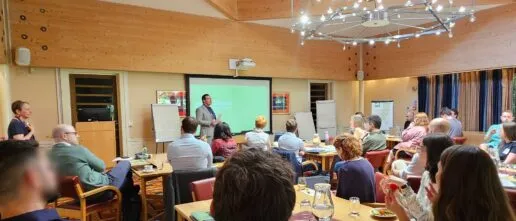
Over 40 people gathered in Oxford’s Wytham Woods and dedicated themselves wholly for three days to reflect on the flaws of the current financial system causing it to drive ecological crises, collectively envisage solutions to redirect capital to nature-positive actions and reevaluate how society thinks about value.
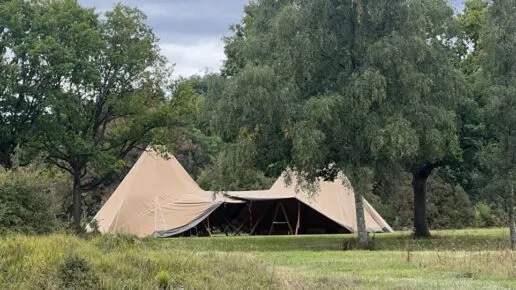
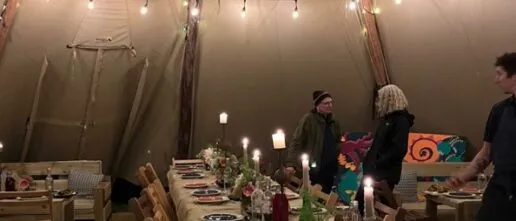
The importance of place became immediately clear. Hosting all activities in tipis or in the forest, with no running water or electricity, poor mobile service and at the mercy of the harsh British autumn weather were critical in fostering reflection, deep conversation and creativity. Organising the conference outside of sterile, abstract corporate conditions and instead within the rawness and beauty of the living world grounded us in reality. Learning about the ecological context and history of the forest made tangible the idea of deep time and encouraged us to reflect on the discrepancy between the duration of life on Earth and how quickly humans are eroding this vast force. Providing nourishing food sourced solely from UK farmers and prepared fresh by incredibly talented young chefs invited us to reflect on the globalised food system and the way in which we connect to nature and each other through what we consume.
While addressing relationships with place was instrumental, the connections formed between participants were essential. I joined the organising team late in the process and only met them a couple of days before the event. However, the compassion, assurance and solidarity that grew between us were something truly special. We learned each other’s ways of working, and began to anticipate when we are needed and how we could be of service to keep the event flowing smoothly. I am grateful and honoured not only to have been trusted to fulfil my role as a facilitator, but also to participate in the workshops and contribute to the collective rethinking of a financial system in service of life.
I truly believe in the importance of empowering young people from diverse backgrounds, that have far-reaching aspirations and deep love for nature, to realise systemic change. For me, this experience has been a catalyst, reigniting my motivation to dedicate my career to creating a nature-positive future. I am confident that including future generations in these discussions not only brings new and invaluable perspectives to the conversation, but also offers hope and inspiration for future leaders.
Learning about the incredible contributions and achievements of the participants before the event brought a great sense of admiration but was also intimidating. For someone at the beginning of their career journey, meeting the people that you aspire to and that are having real impact in the field that you are deeply passionate about is quite daunting.
However, this is where the atypical structure and location of the conference made a meaningful contribution. Spending mornings, evenings and mealtimes with each other for three days, with minimal distraction from technological devices, acutely aware of the daily luxuries we were missing, and being reconnected with nature, uncovered our shared humanity and dissolved the weight of impressive CVs. Furthermore, a shared determination to protect and restore nature meant we held common values and visions, which led participants to engage with the topic not only during workshops, but also into breaks and mealtimes. It was incredibly refreshing to observe people living and breathing the subject of green transitions throughout.
Beyond the way in which we naturally opened up as a result of being immersed in the woods and sharing mundane moments, the intentional design of the agenda furthered connections even more. Beginning the conference by untangling the deep flaws of the current financial systems included exploring what determines daily individual financial actions. Fear, ego and disconnection emerged as central emotions driving the unsustainable circulation of capital and what we consider to be valuable. All three can be addressed to some extent in order to move away from the extractive financial model; however, it is in our nature to still worry about our financial stability, for example. Envisioning the consequences of the current system and considering alternatives for next generations was also instrumental in reimagining the future we should seek to cultivate.
The work didn’t stop there: once problems were identified, it was crucial to move to co-creating long-term, effective solutions. For the rest of time, participants identified opportunities for systemic change and devised initiatives that push the boundaries of the current financial system or designing novel mechanisms aligning finance with nature. These ideas became ‘seeds’ for the green transition, to be nurtured so they could grow into robust frameworks that redirect capital towards a nature-positive future.
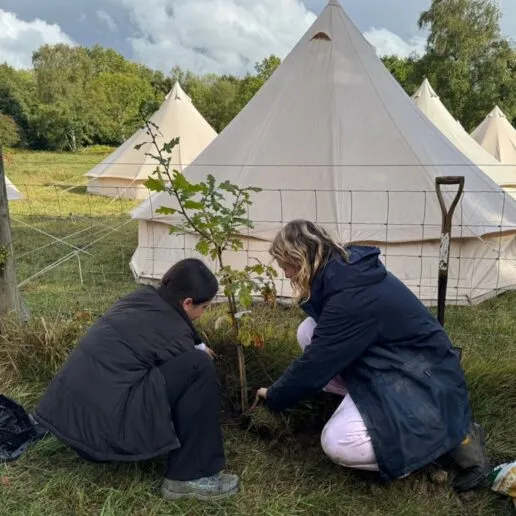
To crystallise the hope, inspiration and vision which emerged over the three days, and to reinforce the determination to ‘sow the seeds’ that were crafted, we planted an oak tree. In addition to being a symbolic moment, it served as a reminder to get our hands dirty, to bring tactility into our work, and to recognise the embodiment of the living world against the abstractness of human-made systems like finance.
Ultimately, I return to the importance of relationships in shaping entities: how relationships with place (such as being in Wytham) shape intentions, interpretations and attitudes; how relationships with time and the deep history of life on Earth shape our awareness of human egocentrism; how relationships with finance shape how we engage with money daily and where we see value; how relationships with community members shape principles we hold and our motivation to co-create a better future; and, last but not least, how our relationship with Nature shapes how we define ourselves and the importance we give to other living beings, which determines our impact. Perhaps the missing piece hindering the green transition is the need to address each of these relationships. The real value of the conference might lie in the cultural shift that happens when we bring people together in service of something bigger than the individual: in service of community, of future generations, and of nature. With this insight, we should seek to recreate such spaces around the world to build resilient networks of relationships that nurture whole entities.
Related News Articles
Designing for Life: Reimagining Nature Finance
A provocative new essay aims to stimulate deep reflection, conversation and creativity around the topic of nature finance.
Reimagining Nature Finance
“We invited nature to the meeting, but as thunder rolled and lightning cracked, it became undeniable where power actually resided.”
Related Research Themes

Finance
Scaling finance and investment for rapid nature recovery at a global scale.