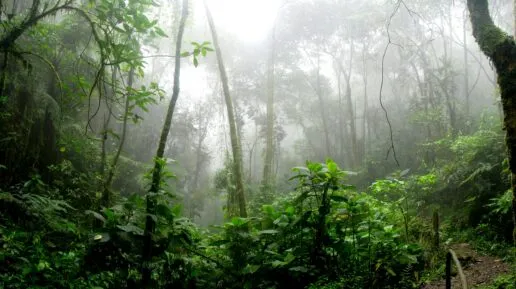
This project examines how environmental governance, sovereignty, and market regulation interact across scales in artisanal and small-scale gold mining (ASGM) supply chains linking the Peruvian Amazon to Europe. Focusing on Madre de Dios — a biodiversity-rich region experiencing rapid extractive expansion — it investigates how mining governance shapes ecosystem degradation, forest loss, and river contamination, alongside the social and economic realities of Indigenous communities and migrant miners who depend on these landscapes. Particular attention is given to how formalisation policies, enforcement practices, and international due diligence regimes influence both ecological outcomes and local livelihoods.
Drawing on political ecology, the project develops three conceptual frameworks — compounding territorialisation, adaptation sovereignty, and polycentric lock-in — to analyse how overlapping governance systems generate both exclusion and opportunity. Through multi-sited fieldwork in Peru and Europe, including interviews with Indigenous leaders, miners, refiners, and regulators, it traces how local adaptation strategies and assertions of resource sovereignty intersect with transnational supply chain governance.
By connecting community-level experience with global regulatory and market systems, the project contributes to debates on environmental governance, resource justice, and pathways toward more equitable and effective mineral supply chains in ecologically sensitive regions.
Related Research Themes
Ecology
Testing the effectiveness of different ecological approaches for nature recovery to support biodiversity and the delivery of ecosystem services such as climate change mitigation and adaptation.

Scale and Technology
Tracking and evaluating nature recovery at both fine resolution and large spatial scales utilising state-of-the-art remote sensing, big data, and deep machine learning techniques.

Society
Encompassing the governance and socio-cultural dimensions of nature recovery.

Systems
Developing a novel Analysis and Decision Platform to integrate nature recovery into land-use and infrastructure planning, and exploring scenarios that can deliver local, national and international commitments to nature, climate change and sustainable development.

Finance
Scaling finance and investment for rapid nature recovery at a global scale.
