Many international biodiversity treaties require “fair and equitable” benefit-sharing, but do not offer guidance on how to operationalize. Such sharing is also a diffuse phenomenon in public international law. The new Biodiversity Beyond National Jurisdiction (High Seas) treaty goes even further to require implementation of the Common Heritage of Humankind, a principle of international law and ethics, but without operational guidance. This seminar discusses how to operationalize “fair and equitable” benefit-sharing and the CHH principle drawing from political philosophy, economics, statistics, public international law, and international relations.
The seminar also provides estimates of relative inequality of opportunity among individual States from a new harmonized global database for the entire globe and for individual biodiversity regimes. The seminar also provides quantitative estimates of regime-specific revealed ethical preferences for equity and social discount rates for inter-generational equity. Empirical results make clear that fairness and equity must extend beyond formal static distribution to include the capacity to participate and utilize biodiversity through real economic opportunity. Fairness and equity are not just a distribution problem—they are a development problem embedded within a global biodiversity governance system.
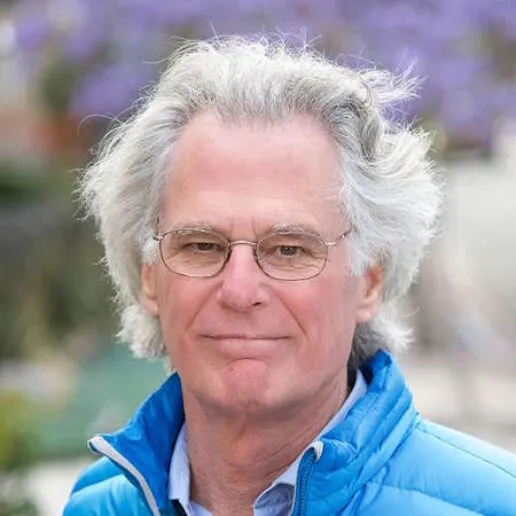
Dale Squires is Adjunct Professor of Economics at the University of California San Diego, Special Economics Advisor to the Inter-American Tropical Tuna Commission, and former Senior Scientist US NOAA Fisheries. He teaches Economics of Conservation and other courses at UCSD. He is the architect of one national and one international natural resource management plan and has decades of experience as a member of US delegations to international organizations and treaty negotiations. The seminar is rooted in hands-on lessons learned designing fair and equitable allocation systems for deep-seabed mining with the International Seabed Authority and fishing opportunities for international fisheries organizations and extensive personal experience negotiating with international organizations and governments.
The Leverhulme Centre for Nature Recovery and the Nature Network are interested in promoting a wide variety of views and opinions on nature recovery from researchers and practitioners. The views, opinions and positions expressed within this lecture are those of the author alone, they do not purport to reflect the opinions or views of the Leverhulme Centre for Nature Recovery/Nature Network, or its researchers.
