Details:Life as we know it cannot exist without forests. Over 25% of the world’s population relies on forests’ resources for their livelihood. Forests regulate climate by storing vast amounts of carbon and absorbing around 3 of every 10 molecules of CO2 emitted annually by humans to the atmosphere. However, forests, the benefits they provide and the connections between forests and human populations are currently endangered due to the growing pressure from global change. Understanding forest functioning and how it has been changing over time allow us to protect these ecosystems. In this talk, I will present some of our work to understand forest dynamics across space and time and in different systems. I will also present some of our efforts to translate research into policy.
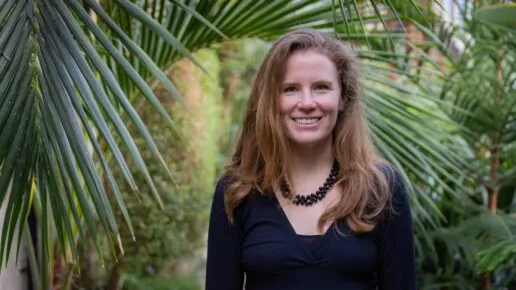
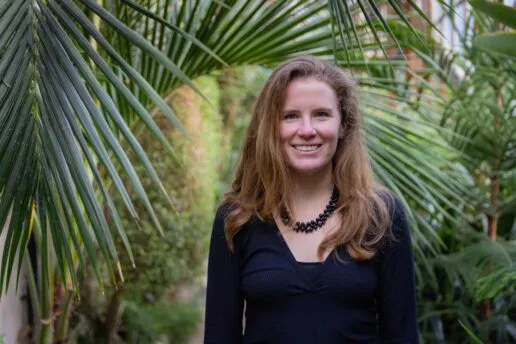
Biography: Adriane Esquivel Muelbert is an Associate Professor head of the Global Change Ecology group in the Department of Plant Sciences and Conservation Research Institute. Her group investigates the impact of global change on forests, their biodiversity, and the ecosystem services they provide focusing on two fundamental components of forests: the composition of tree species and the dynamics of these systems. Adriane has led several syntheses of forest ecology at large scales, working with colleagues from across the globe. She coordinated efforts that brought together field biodiversity data on forests from across the Tropical Americas and forest dynamics data globally, and currently coordinates efforts integrating drone, AI, and field techniques to understand when, where, and why large trees die. Adriane works towards bringing solutions to our environmental crisis through inclusive and fair science, working with policymakers, artists, and practitioners across several projects and countries.
The Leverhulme Centre for Nature Recovery and the Nature Network are interested in promoting a wide variety of views and opinions on nature recovery from researchers and practitioners.
The views, opinions and positions expressed within this lecture are those of the author alone, they do not purport to reflect the opinions or views of the Leverhulme Centre for Nature Recovery/Nature Network, or its researchers.