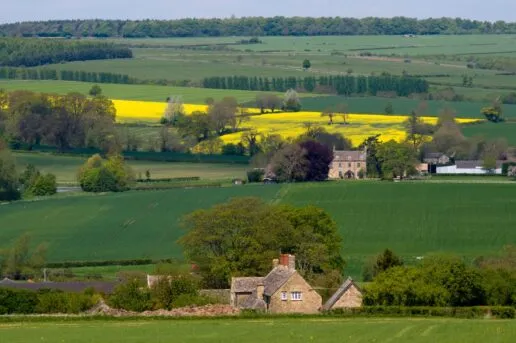
Biodiversity markets are increasingly being used in conservation policy, but we still don’t fully understand how their design shapes who gets involved and what actually happens for nature on the ground. A new open-access article in Environmental Policy and Governance by Mattia Troiano, a researcher at the ECI, and colleagues looks at this question through England’s Biodiversity Net Gain system, based on interviews and participatory mapping work in Oxfordshire.
Rather than treating these markets as neutral systems, the article shows that design choices matter. They influence who can participate in nature recovery, and how well different efforts connect across landscapes — with clear implications for both inclusion and joined-up conservation, two core pillars of recent English Environmental Policy ambitions.
As environmental market mechanisms continue to expand worldwide, this article in Environmental Policy & Governance brings together work by Mark Hirons (Senior Researcher, ECI), Sophus zu Ermgassen (Researcher, Department of Biology), myself, and a wider team of collaborators across the ECI and The Nature Positive Hub at the Department of Biology, and the Oxfordshire Local Nature Partnership to look at how England’s biodiversity market is actually working in practice.
Rather than focusing only on policy design, we were interested in something more grounded: who is actually participating in habitat banking, and what kinds of collaboration are emerging as a result.
What quickly becomes clear is that biodiversity markets don’t just channel money into nature recovery. They also shape the relationships behind it — who works with whom, how land is used, and how decisions get made across landscapes.
One of the key insights is that there isn’t a single “model” of how this happens. Instead, different types of organisations have developed quite different ways of delivering habitat banking, and these differences matter.
Some approaches are built around scale and investment. These tend to make it easier for landowners to take part, including those without experience in nature markets and private conservation finance, because the financial and technical expertise sits with the provider. But collaboration in these cases often stays fairly narrow, focused on getting projects delivered efficiently as part of the commercial and for-profit organisational nature of these provides, rather than building wider landscape coordination. One landowner stressing the risk adversity and financial benefit they found in leasing their land to a market provider in this category highlighted that:
"The [for-profit provider organisation] have established a mechanism for me to access BNG and I'd be reinventing the wheel if I tried to do it. I'm not qualified in the way that they are to achieve their desktop objectives over that 30-year period. All I would be doing is I'd be paying somebody else to advise but that's not taking any of the risk.”
Other approaches are much more rooted in place. These are more closely connected to conservation networks and local nature recovery planning, and they tend to support stronger collaboration across organisations and landscapes. The trade-off is that participation is more limited, often relying on existing relationships or own access to suitable land, financial capital, and institutional support, typical of conservation organisations.
There is also a middle ground, where individual landowners are directly involved but supported by not-for-profit organisations that help design projects, navigate regulation, and connect them into wider conservation plans. These organisations effectively act as facilitators between landowners, policy, and ecological priorities, while also helping reduce risk and complexity for participants. One landowner in this category highlighting the collaborative, rather than competitive, approach fostered around their habitat banking project remarked that:
"The other things that we have committed to do is be very open and transparent with a lot of other entities. So, there are other parts of [a] University that we engage with in terms of monitoring, we engage with [another] University in terms of flood land meadow monitoring. We have [NGO] there in terms of nutrient neutrality, water, etcetera.”
Across all of this, a consistent pattern emerges. The more a model is designed for scale and ease of participation, the more it can fragment collaboration. And the more it supports deep collaboration, the more it tends to depend on existing networks and capacity.
So rather than thinking about biodiversity markets as neutral delivery tools, it becomes more useful to see them as systems that actively shape how nature recovery is organised — not just funded.
So what does this mean?
The main takeaway is that biodiversity markets don’t just “support” conservation — they structure it.
If the priority is maximising participation and investment flow, markets tend to favour faster, more scalable approaches. But that can come at the cost of weaker ecological coordination and social collaboration across landscapes. On the other hand, more collaborative approaches tend to deliver stronger alignment with local conservation goals, but are often less accessible to a wide range of landowners.
So the real question is not whether biodiversity markets work in general and should be considered a desirable, or detrimental, political conservation tool as a whole. Rather, they should be evaluated against what kind of nature recovery they produce in the light of social-ecological priorities and ambitions of the landscapes in which they’re deployed as well as their implications on the ways in which we organise as a society to sustain a nature finance fit to realise those ambitions.
Why this matters
This matters because Biodiversity Net Gain is no longer an experiment. It is becoming a core part of how land-use and conservation policy is delivered in England, and it is attracting attention internationally as a potential model.
The findings suggest that small design decisions in these systems can have big consequences for whether nature recovery ends up being coordinated at landscape scale, or instead delivered in more fragmented, opportunity-led ways.
Read more
The full discussion explores these dynamics in detail, including the underlying mapping work, interview evidence, and implications for how biodiversity markets are designed and governed in England and beyond.
Related Research Themes

Society
Encompassing the governance and socio-cultural dimensions of nature recovery.
Related Projects

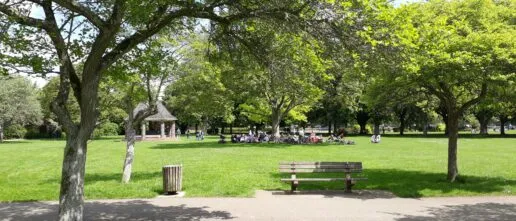
Community values in accessible urban green spaces and planning: An Oxford case.
Investigating community values in accessible urban green spaces and assessing the equity of urban green governance across different socio-economic areas of Oxford.
National to local disconnects in greenspace policy
Exploring disconnects and synergies for greenspace across health, nature and climate resilience policies through an equity lens
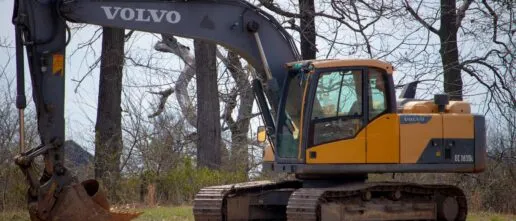
Coordinating Research Around Biodiversity Net Gain
At its heart, BNG frames a challenging question: in a world where new housing, workplaces and other land use needs are deemed essential; is it possible to provide this infrastructure without Nature bearing the brunt of the costs?
Partners

