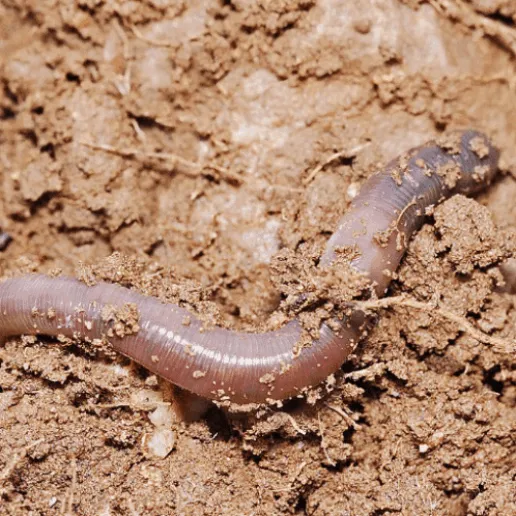
This World Soil Day, researchers are drawing attention to an overlooked dimension of ecosystems — their sound. From the lively chorus of birds and insects in a thriving forest to the subtle clicks, scrapes, and rustles beneath our feet, soundscapes carry vital clues about ecological health.
Scientists say that human activities are altering these natural acoustic environments. In some places, traffic, machinery, and industrial noise drown out wildlife; in others, once-vibrant habitats fall eerily silent as biodiversity declines.
To better understand these changes, research teams are increasingly using passive acoustic sensors to monitor ecosystems on land, underground, and underwater. These devices capture data on animal presence, behaviour, and broader ecosystem function by recording the full soundscape. While traditional ecoacoustic studies mainly measure correlations between sound and biodiversity, a new wave of research aims to directly link acoustic patterns to ecological energy flows — a crucial step toward monitoring habitat recovery.
“We’re working to make this approach scalable and globally relevant,” the team explains, highlighting the role of advanced machine-learning tools that can distinguish species, functional groups, and even human-made versus natural sounds.
The project spans multiple continents and ecosystems — grasslands in Oxfordshire, native forest restoration sites in Scotland, landscape recovery areas in Ghana, and savannah restoration in Kenya. Alongside conventional field surveys and remote sensing, these recordings will help validate new acoustic-based measures of ecosystem health.
One of the toughest challenges is estimating species abundance from sound alone. This is essential for understanding how energy moves through ecosystems — the interactions that sustain life. To tackle this, researchers are deploying sensor arrays above ground to monitor bats and below ground to capture the activity of earthworms and other soil-dwelling organisms.
The shift toward subterranean acoustics marks a significant frontier in ecological science. Soil hosts a complex web of life and plays a central role in nature recovery, yet little is known about what different underground sounds mean. To bridge that gap, scientists are building the first open sound libraries of soil fauna, beginning with earthworms, to train machine-learning models capable of identifying and interpreting these hidden noises.
As global efforts to restore degraded habitats intensify, researchers hope that listening more closely to the soil will become a critical tool for measuring progress.
Related Projects
Ecoacoustics for assessing ecosystem health and function, from air to soil
Developing scaleable, transferable, and open approaches for ecoacoustics to assess nature recovery across global ecosystems

Ecoacoustic Data Analytics
Advancing AI methods to determine ecosystem composition from acoustic recordings, distinguishing species, geophonic & anthropogenic sounds in soundscapes as well as flagging unusual or unanticipated sounds.
Revealing the compositional and functional responses of mycorrhizal fungi to rewilding at the Knepp Wildland
Using novel eDNA methods to understand if rewilding is also serving below-ground communities, focusing on 'keystone' mycorrhizal communities and their functions.

The role of regenerative farming for biodiversity and ecosystem functioning
We utilise both standardised and cutting-edge methods to explore biodiversity and ecosystem functioning along a land use gradient to better understand the role of regenerative farming.
An energetic approach to assessing nature recovery in soils – a regenerative agriculture case study
Measuring and comparing energy to and through soil biodiversity under regenerative and chemical farming to understand and assess nature recovery in this traditional ‘black box’
Related Outputs
Regenerative Agriculture in the UK. An ecological perspective
This report, produced by the British Ecological Society brings together 40 academics, including LCNR’s Jed Soleiman, practitioners and farmers across the UK to explore the evidence for Regenerative Agriculture as a solution to delivering for both food and nature. Summary report here
