2026
Emerging potential and remaining challenges of monitoring soil health using passive acoustic approaches
Summary
- Monitoring soil health is important for identifying successful management practices to improve outcomes for people and nature, particularly in agricultural contexts.
- Passive acoustics combined with transparent analysis approaches has huge potential for democratising and scaling up soil monitoring. However, current approaches for analysing soil soundscapes do not explain the processes linking soil health to the soundscape.
- Early results of our research into the suitability of passive acoustics for monitoring soil health in UK pastureland systems, highlight the need to explore the mechanisms behind associations between soil health and soil sounds.
- We particularly emphasise that soil ecoacoustics is new area of work, therefore, evidence is still emerging.
Introduction
Improving soil health is vital for achieving equitable, long-lasting environmental recovery that benefits people and nature. Research increasingly demonstrates the positive links between healthy soil and tackling climate change, biodiversity recovery, water quality management, reducing flood risk, increasing crop production, and positive human health outcomes. Earlier this year (2025), in recognition of the holistic outcomes of healthy soils the EU enshrined soil monitoring into law. However, monitoring soil health can be manually intensive, requiring chemical analysis, or expert identification of tiny to microscopic soil fauna. These approaches are not scalable, meaning only a small area of land can be surveyed at a few points in time with scarce expertise, limiting our understanding of the processes driving positive or negative changes in soil health. New technological approaches offer opportunities for enabling essential soil health data to be collected at larger scales, in a more accessible way.
Passive acoustic monitoring, the use of autonomous recording units to collect ecoacoustic data, is now a widely used tool for surveying above ground and underwater habitats. Recent advances in technology now enable passive acoustic sensors to be deployed for extended periods of time and in many locations simultaneously, collecting valuable data at scales relevant for understanding processes driving changes in environmental health. Analysis of ecoacoustic data may focus on identifiable sounds made by animals (biophony), providing information on species presence, activity and density, or whole soundscape analysis, comparing the amount of biophony with the levels of sounds associated with human activities (anthrophony). Soundscape analysis can be used as a method for rapid ecosystem health assessment and has been particularly useful in locations or habitats where there is limited knowledge about animal specific sounds, such as coral reefs and tropical forests. In the last few years, researchers have begun exploring passive acoustics as a scalable approach for soil health monitoring, a realm where the sources of many recorded sounds remain a mystery, making soundscape analysis a logical approach.1
Our work
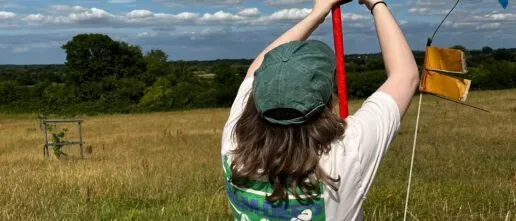
We are investigating whether passive acoustic monitoring of the soil is a suitable approach for assessing soil health and the performance of nature recovery approaches in UK grassland agricultural landscapes. In the summer and autumn of 2024, ecoacoustic data were collected at 10 grassland sites in Oxfordshire across three farms and one ex-farm, along a gradient of intensive cattle farming, regenerative cattle farming, and passive rewilding site. Alongside passive acoustic sensors deployed in the soil for 24 hours at each site, traditional soil biodiversity monitoring was conducted, collecting hundreds of specimens of large and tiny soil dwelling animals, such as earthworms, ants, woodlice, millipedes, beetles, and insect larvae. Earthworms made up the majority of soil invertebrates collected, with a particular dominance in the autumn.
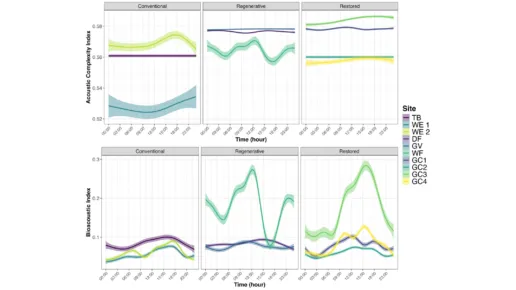
We have first used soundscape analysis approaches to assess whether there are significant differences between the grassland management types. Applying a suite of acoustic indices,2 which seek to quantify habitat health through a numerical description of soundscape dynamics, early results indicate that the soundscapes of the restored sites may be significantly different to the conventional sites (Figure 1). However, it is unclear whether these differences in the soundscape are due to the outcomes of restoration or other factors. We think further work is needed to unpick the mechanisms linking soil soundscapes to soil health and possible confounding factors. For instance, the impact of soil type and moisture on sound transmission is not well known, yet it will impact the sounds recorded. Furthermore, given the field’s infancy, there is a need for standardisation in data collection protocols, including passive acoustic sensor and recorder types, and audio data processing methods.
Figure 1: Trends in two acoustic indices used to analyse soil soundscape data collected over a 24 hour period in the Oxfordshire pasture gradient study sites. The lines are coloured by site names.
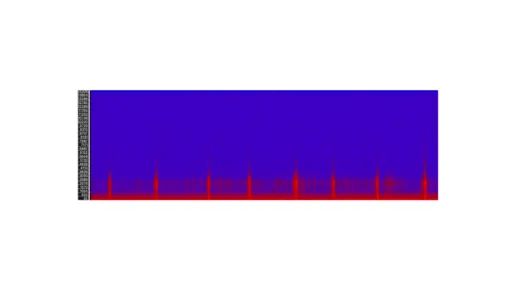
There were significant correlations between the number of earthworms collected and many of the acoustic indices, suggesting they contribute to the soundscape through the sounds they make moving and eating, such as a distinctive ‘scrape’ (Figure 2). We think that identifying such faunal specific sounds will give us better insight into the health of the soil and above ground habitat, enabling us to unpick what is driving differences between sites. Starting off with the earthworm ‘scrape’, we are developing an open-source machine learning model to automatically detect this and other soil faunal sounds in the data. Estimating activity and densities of soil fauna from passive acoustic monitoring data would better indicate soil function and the effects of regenerative or restorative management practices to be identified. Our work ultimately aims to fill in evidence gaps in the suitability of passive acoustics for monitoring soil health across multiple sectors and environments in the UK, but particularly agricultural systems. If successful, this monitoring approach could empower farmers and land managers to more easily collect and analyse their own soil health data and enable soil health data collection at the scale needed for identifying sustainable practices.
Figure 2: Spectrogram of an earthworm ‘scrape’ recorded in Oxfordshire grassland. Listen to the earthworm scrape and other examples of our soil soundscapes on Soundcloud.
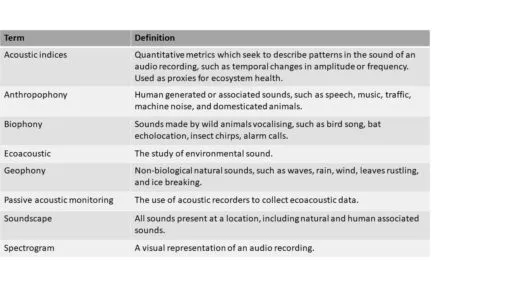
Glossary
References
1. Robinson, J.M., Annells, A., Cavagnaro, T.R., Liddicoat, C., Rogers, H., Taylor, A. and Breed, M.F. 2024. Monitoring soil fauna with ecoacoustics. Proceedings of the Royal Society B: Biological Sciences, 291 (2030): 20241595. doi: 10.1098/rspb.2024.1595
2. Bradfer-Lawrence, T., Duthie, B., Abrahams, C., Adam, M., Barnett, R.J., Beeston, A., Darby, J., Dell, B., Gardner, N., Gasc, A., Heath, B., Howells, N., Janson, M., Kyoseva, M.-V., Luypaert, T., Metcalf, O.C., Nousek-McGregor, A.E., Poznansky, F., Ross, S.-J., Sethi, S., Smyth, S., Waddell, E., Froidevaux, J.S.P. 2025. The Acoustic Index User’s Guide: A practical manual for defining, generating and understanding current and future acoustic indices. Methods in Ecology and Evolution, 16, 1040–1050. doi: 10.1111/2041-210X.14357
Related Projects

Ecoacoustic Data Analytics
Advancing AI methods to determine ecosystem composition from acoustic recordings, distinguishing species, geophonic & anthropogenic sounds in soundscapes as well as flagging unusual or unanticipated sounds.
Ecoacoustics for assessing ecosystem health and function, from air to soil
Developing scaleable, transferable, and open approaches for ecoacoustics to assess nature recovery across global ecosystems

The role of regenerative farming for biodiversity and ecosystem functioning
We utilise both standardised and cutting-edge methods to explore biodiversity and ecosystem functioning along a land use gradient to better understand the role of regenerative farming.
