Publications
LCNR supported
Society
Environment and Planning E: Nature and Space (2025)
Rewilding is a new approach to wildlife conservation that challenges the temporalities of orthodox approaches to identifying and securing desired environments. It encourages conservationists to look to deeper pasts and further futures as they formulate appropriate reference points for the Anthropocene. It figures conservation less as the prevention of species extinction and more as the choreography of ecological processes to secure desired functions and services. This paper focuses on Britain and the use of large herbivores and native trees to enable afforestation. It develops and applies a novel conceptual framework for critically examining the temporalities of rewilding by drawing together cognate literatures from political ecology, environmental philosophy, time studies, queer theory and disability studies to help theorise the chrononormativities and chronobiopolitics of rewilding. The analysis comes in three parts. The first examines the normative political strategies of baselining and horizoning through which pasts and futures are mobilised to legitimate present rewilding practice. The second explores the environmental biopolitics through which temporal rhythms are choreographed in the practices of rewilding, exploring how processes of ecological succession are curated and how rewilders deal with unexpected events. The final part of the analysis critiques the emerging chrononormativities and chronobiopolitics of rewilding in Britain and advocates for alternative models more conducive to multispecies flourishing in the queer, crip ecologies of modern Britain. The conclusion identifies priorities for future research on time in conservation and calls for continued conceptual engagement at the interface of political ecology and queer and disability theories.
Related Research Themes

Society
Encompassing the governance and socio-cultural dimensions of nature recovery.
Related Projects
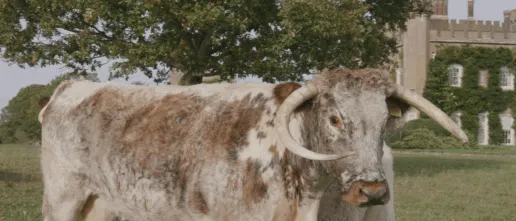
British Rewilding in a Global Frame
Examining worldwide influences on rewilding, in Britain and beyond, to clarify broader environmental transformations

Rewilding The City
Investigating urban rewilding initiatives, from top-down governance schemes to local community-based practices.
