This project is the result of an international collaboration led by the United Nations Development Programme and researchers including those from the Centre.
Together they will be developing a “Nature Relationship Index” (NRI) to sit alongside the Human Development Index (HDI). The aim is to track how countries are improving human relationships with the rest of life on Earth, including a thriving and accessible nature, using natural resources responsibly, and protecting ecosystems – turning these into measurable goals for progress.
Current measures like GDP, and even the HDI, do not account for how we relate to the rest of life on Earth. The NRI will be a global metric designed to complement the HDI, and capture the quality of a nation’s relationship with nature. It will assess how well countries are caring for ecosystems, ensuring equitable access to nature, and protecting it from harm. In other words: countries investing in shared spaces for nature and people, clean air and water, and restoring ecosystems could see its NRI rise, rewarding positive action rather than just recording decline.
The NRI is being developed with the aim of debuting in the Human Development Report, with the long-term goal of regular country-level updates, just like the HDI.

The Nature Relationship Index at a glance
- Expands the aspirational space of development to include thriving human-nature relationships.
- Provides a globally accepted, values-based metric to guide and celebrate progress toward more sustainable futures.
- Aims to shift focus from avoiding environmental harm to fostering aspirational, positive relationships with nature.
- Seeks to empower societies to pursue a future where people and nature thrive together.
- Inspired by the HDI, the NRI tracks open-ended progress.
- Measures how well societies balance human development with caring, sustainable interactions with nature.
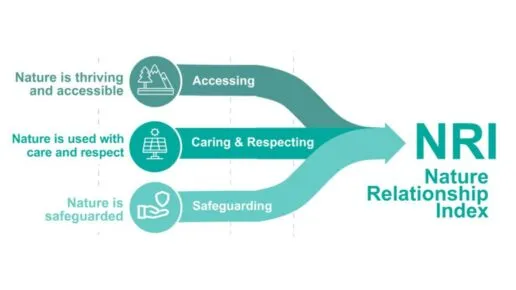
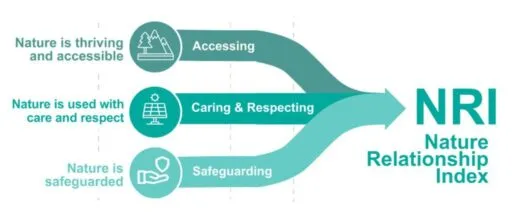
Three Core Dimensions of the NRI:
- Nature is Thriving and Accessible: Measures extent and access to natural areas.
- Nature is Used with Care: Evaluates the sustainability of resource use and impacts like emissions.
- Nature is Safeguarded: Assesses legal and institutional commitments to protecting nature.


Related Outputs
An aspirational approach to planetary futures
A new paper in Nature Prevailing frameworks to address planetary environmental challenges tend to focus on setting goals, targets, or boundaries to limit human harm to ecosystems or species. Here we propose an aspirational approach aimed at empowering people to shape a better future for all of life on Earth.
Partners