By Dr Oliver Owen
Like many UN agreements, the Convention on Biological Diversity places much expectation and responsibility on nation-states and their sovereignty over resources including nature. Yet in many countries, and especially in Federal and devolved systems such as the USA, Brazil or Nigeria, actual powers to manage nature lie largely with sub-national Governments, about which the Convention is largely silent.
We know that sub-nationals are essential for making biodiversity policy and the management of nature work. However, there is very little data available to or used by sub-national Governments to enable them to plan nature and biodiversity policy effectively. This is particularly the case in ‘ordinary Africa’ – the highly anthropogenic environments which are outside protected areas and which in fact constitute most of the continent.
In 2025-2026 Ekiti State in Nigeria worked with local ecologists and Oxford researchers, funded by the Oxford University John Fell fund, to extend a locally-led biodiversity survey into a larger-scale research and baselining tool using citizen science to build a more accurate local picture of species presence and diversity.
Ecologist Chloe Strevens and anthropologist Olly Owen worked with ecologists Dr Babajide Agboola, Bamidele Olajuyigbe and Oladayo Omotayo, collaborating with Oluwaseyi Ebenezer of local non-governmental organisation TGED Foundation and Dr Akinyemi Akinyugha of Ekiti State Government to create a method of working which leveraged the public engagement data platform iNaturalist alongside participatory fieldwork exploring local ecological knowledge. The project worked with five target groups – farmers, hunters, students, female plant gathers, and ecotourism/hiking guides – to understand and document knowledge about nature in three target communities and more widely across the State.
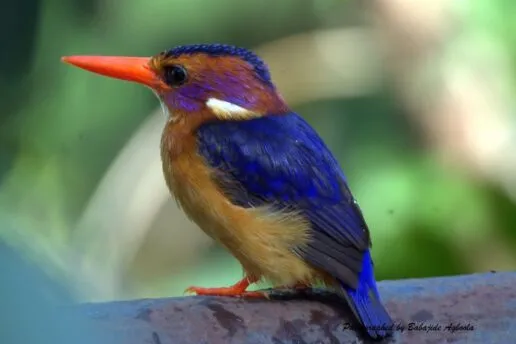
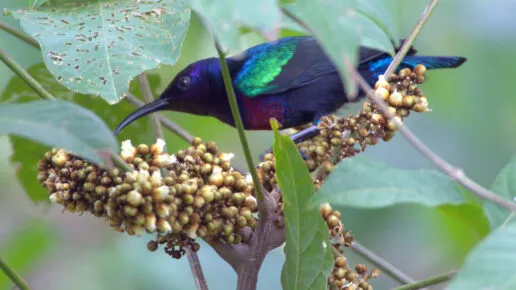
The exercise, combined with literature review and other fieldwork observation by the same project team, revealed the local presence of a wide array of species of flora and fauna, many of which had not previously been formally documented. This included two species whose IUCN Status is Critically Endangered, eight listed as Endangered, including one endemic to South-Western Nigeria, 18 Vulnerable species, and 17 Near Threatened.
Moreover, of the remaining species listed as of Least Concern or as Data Deficient, the survey also recorded observations of many which are functionally nearly extinct in the local and regional landscape, even whilst their global population status is recorded as healthy. This is particularly important as regards indigenous rainforest trees – whilst their relatively large range and abundance in National Parks in the wider region makes the situation look stable, in the local mosaic landscape of farms, fields and small forests, a species such as African Ebony (Diospyros mespiliformis) may be nearly extinct.
The general gap in more localised knowledge such as the Ekiti biodiversity survey has attempted to redress gives rise to four problems. Firstly, the apparent overall stability of populations may disguise wide local variation from abundance to near-extinction, which actually requires more tailored management approaches, such as in timber fees or licencing. Secondly, such localised near-extinctions, which may happen nearly un-recorded, delete unrecoverable genetic diversity and possible localised adaptation from the overall gene pool of the species. Thirdly, it may further disconnect ‘island’ populations which lose gene flow and gradually dwindle or lose resilience to shocks as they are isolated. Fourthly, only local knowledge generated in context can pin down the role these species play in particular ecosystems; as habitats, providers of ecosystem services, and as part of human livelihoods.
The problem is compounded by the fact that IUCN data on African rainforest trees is in many cases nearly three decades out of date, and that there is little research into sub-species and local variation. So status listings may suggest an abundance that is in fact not the case, especially compared to what a stable population of the species should look like. Hopefully, by co-creating more granular and accurate data with subnational governments and publics, we can get some way towards building the potential of sub-national regions to make their own effective contribution to delivering on CBD goals.
We also thank Dr Steph Brittain, Dr Mark Hirons, and Professor E.J. Milner-Gulland for their advice and assistance on this project.
Related News Articles
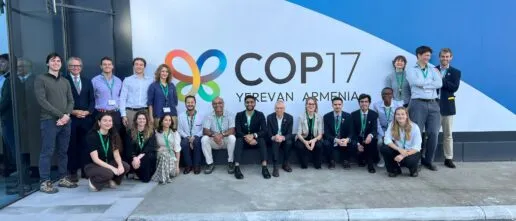
Oxford University COP17 Delegation
Are you going to COP 17? It'd be great to meet you there.

The University of Oxford at COP17: Advancing Global Action for Nature

To reverse nature loss, change what drives it
David Cooper and Sandra Díaz publish an editorial in Science calling for us to address the root causes of nature loss