Biodiversity conservation is undergoing a transformation in governance, rhetorically shifting from traditionally public sector–led approaches toward models that increasingly involve private investment and private enterprise. Despite growing interest, the literature on biodiversity-related business models remains fragmented across disciplines including conservation science, finance, innovation and management studies, and the implications of different models for biodiversity remain understudied. We review five types of biodiversity business models (BBMs) with different pathways to biodiversity impact, distinguishing between models that aim to: (1) generate biodiversity as a co-benefit of other economic activities; (2) deliver biodiversity as a direct and often commodified output; (3) assist biodiversity management (nature tech); (4) generate biodiversity gains through technological improvements in traditionally damaging economic sectors to reduce or substitute away from biodiversity impacts; and (5) integrate biodiversity to reduce risks and/or increase resilience (or value) of otherwise exposed (or inviable) assets. Drawing on case studies throughout, we review evidence on the biodiversity impacts of different modelsand summarise existing methodologies and future research directions. We also address key conceptual challenges with applying the business model lens to biodiversity. We reveal that many businesses with BBMs already exist; many commercially viable business models have unproven biodiversity benefits; very few attract pure private finance but those that do play a major role in specific contexts such as Southern Africa’s wildlife economy; and, despite increased uptake of BBMs, public policy and public investment remains indispensable for scaling conservation.
Related News Articles
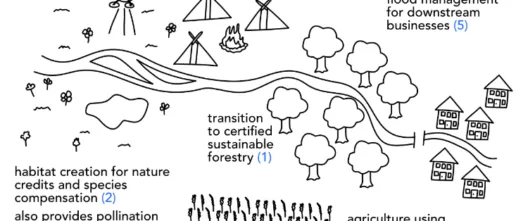
Business models for biodiversity
Preprint out now
