At the UN Biodiversity Conference in Armenia, the focus shifted from grand new promises to the patient work of putting them into practice. Amid ancient landscapes and the tides of history, I found reasons for cautious optimism about the future of nature and international cooperation.
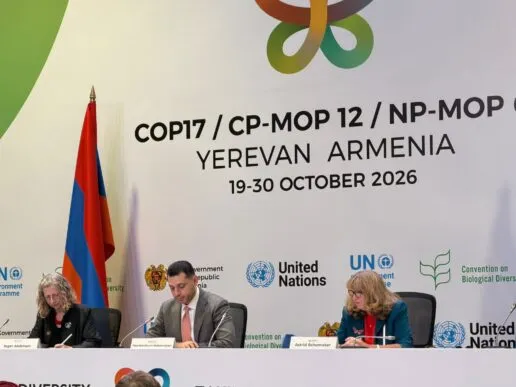
This year the UN Biodiversity Conference (“the seventeenth Conference of the Parties to the UN Convention on Biological Diversity”, or COP17) met in the city of Yerevan, capital of Armenia. Unlike the better-known climate COPs, which focus on global warming, these biodiversity gatherings are concerned with the extraordinary diversity of life on Earth, and how we might halt and reverse its decline. How we might set the world on a pathway to nature recovery, which is the central question for the Leverhulme Centre for Nature Recovery at Oxford University, of which I am Director.
Armenia sits in the southern Caucasus, at the crossroads of Europe and Asia, a region whose history stretches back thousands of years. The tides of history have repeatedly washed over this mountainous landscape, as have successive empires and civilizations: Persian, Roman, Ottoman and Russian, with Armenia also a crossroads of the ancient Silk Roads. These tides have nurtured an extraordinarily rich and resilient culture, but also a history interlaced with tragedy. Yerevan itself is one of the world’s oldest cities, founded some 2,800 years ago. Armenia was the first nation to adopt Christianity as a state religion, before Rome, and its distinctive 1,600-year-old alphabet has played a major role in preserving Armenian culture and identity across borders and through centuries of upheaval.
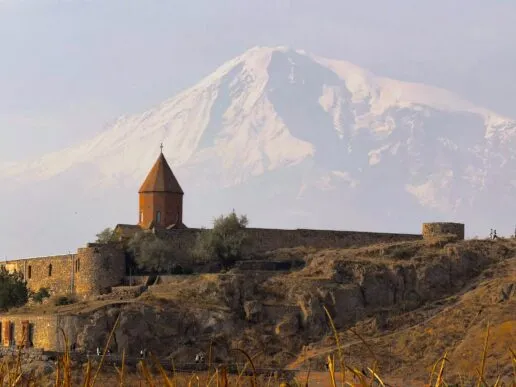
Yerevan’s architecture reflects this layered history: pockets of older buildings and fascinating culture and music mingle with Soviet concrete brutalism and a charming, elegant city centre, whose volcanic tuff stonework glows a gorgeous pink in the October afternoon sun. But the most extraordinary presence lies beyond the city: Mount Ararat. On a clear afternoon, the immense snow-covered mountain can suddenly emerge from the haze, towering over Yerevan. The mythical resting place of Noah’s Ark, this great volcano occupies a central place in Armenian history and identity, despite now lying across the border in Türkiye. Its appearance is startling, almost otherworldly, a vast, ancient and silent presence above the bustle of the modern city.
The patient work of nature recovery
The theme of this COP was Taking Action for Nature, and it was very much a working COP. There were few expectations of grand new announcements or agreements. At Montreal in 2022, the world’s governments had agreed the Kunming-Montreal Global Biodiversity Framework (GBF), a set of 23 targets aimed at halting and reversing biodiversity loss by 2030. This is often described as the “Paris for Biodiversity”, comparable to the Paris climate agreement that set targets for tackling climate change. At the subsequent COP16 in Cali, Colombia, in 2024, some of the mechanisms for delivering these ambitions were developed further. Now, in Yerevan, the emphasis of COP17 was on taking stock of progress and turning promises into action.
I confess I spent relatively little time following the formal negotiations, I won’t write much about them in this blog. There will be many brilliant and informed analyses when COP17 is over. I always enjoy the reporting from CarbonBrief. Tracking the negotiations requires a painstaking attention to process and an understanding of the five-dimensional chess of international diplomacy, demanding a patience that I frankly struggle with. There are tough questions, with perhaps the toughest question being how to finance investment in the conservation and recovery of nature, and to decrease the flood of subsidies that contribute much to the decline of the natural world. These negotiations are also important, however, as they set the framework for international cooperation and action, a framework upon which other actors such as cities, subnational entities, activists, nature organisations, businesses and researchers can build.
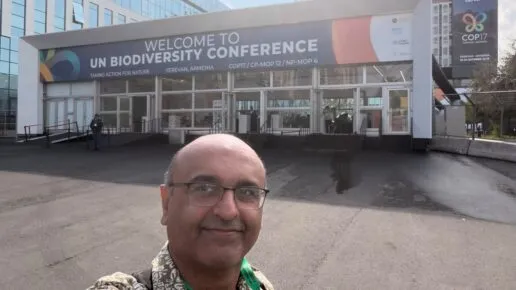
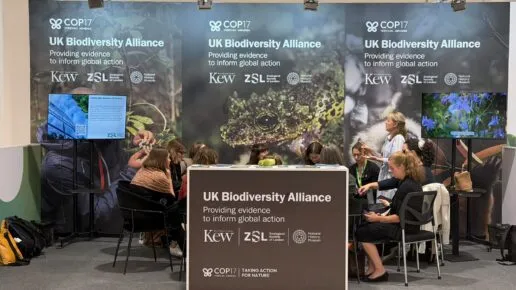
Hence, I was interested in the activity around the negotiations: the broader coalitions for nature conservation and recovery that are emerging and strengthening under the umbrella of the Global Biodiversity Framework. In a plethora of side events, there were scientific presentations and conversations with researchers, NGOs, campaigners, policymakers, indigenous peoples, representatives and others from across the world. These gatherings can be bewildering, with dozens of simultaneous events and a constant buzz of conversation and serendipitous meetings, but they also offer a window into how global ambitions are beginning to translate into action at multiple levels.
I was pleased to see the extent to which the Global Biodiversity Framework is providing a stimulus for action within individual countries. In conversations with scientists and campaigners from different parts of the world ranging from Madagascar, China, Europe and South America, I heard how the internationally agreed targets were helping them make the case for greater ambition at home. In many cases, but not all, the Framework has become a lever for national policy, a benchmark against which governments can be held accountable, and a common language around which different groups can organise. This is perhaps one of the less visible achievements of international agreements. Their influence is not confined to what happens between governments, but extends to the opportunities they create for action within countries, often by people and organisations far removed from the negotiating tables.
The global stocktake of progress towards the 2030 targets presented in Yerevan offered a mixed picture. Nearly 90% of countries have established national biodiversity targets, but fewer than half of the national targets assessed are on track. There is momentum, but the world is still far from delivering on its collective ambitions.
Take the commitment to conserve at least 30% of the world’s land and seas by 2030, which is the best of the targets, which has acquired the catchy title of “thirty-by-thirty”. Official figures reported in Yerevan suggest that around 18% of land and 10% of the ocean are currently covered by protected and conserved areas. Yet these numbers do not tell the whole story. A recent scientific study suggested that, when nationally recognised conservation areas and other potentially qualifying areas are included, as much as 27% of the terrestrial world may already be under some form of conservation management. Also, a number of new protected areas are going through the process of formal proposal. Much remains to be formally recognised, and protecting an area on a map is not the same as ensuring its biodiversity is flourishing. Nevertheless, the picture is more dynamic than the headline figures alone suggest.
Another headline target is to restore 30% of degraded land, freshwater and marine ecosystems by 2030. Here the picture is more sobering. Formal restoration commitments for terrestrial ecosystems appear to have reached around half the target, while those for marine ecosystems are only a quarter of the way there, and freshwater ecosystems a mere 5% of degraded systems. Actual implementation lags further behind, and there is a substantial lack of data on whether restoration efforts are delivering genuine ecological recovery. There is an important difference between promising to restore an ecosystem, undertaking restoration activities, and demonstrating that the ecosystem is actually recovering. This is where science has a crucial role to play.
Another feature of this COP that I followed was the proliferation of scientific and technological tools for monitoring biodiversity. Research institutions, conservation organisations and businesses were showcasing new approaches to mapping ecosystems, tracking species, assessing ecological condition and measuring nature’s contributions to people. I had the impression of a somewhat bewildering melee of platforms, indicators and competing approaches, and it is not yet clear how these will fit together. But the sheer energy being directed towards monitoring the living world was encouraging.
Biodiversity is much harder to measure than carbon, so it is harder to assess if and by how much it is declining or recovering. A tonne of carbon dioxide is a relatively well-defined quantity, wherever it is emitted, but the richness of life cannot be reduced so easily to a single number. Do we measure the number of species, their evolutionary distinctiveness, the functioning and connectivity of ecosystems, the services nature provides to people, or the cultural, relational and intrinsic values of living things? All matter, and no single measure can adequately capture them. It’s a challenge to develop a coherent picture without losing the extraordinary complexity of what we are trying to understand and protect. Perhaps the current profusion of approaches is a necessary stage in that process.
Forests, near and far
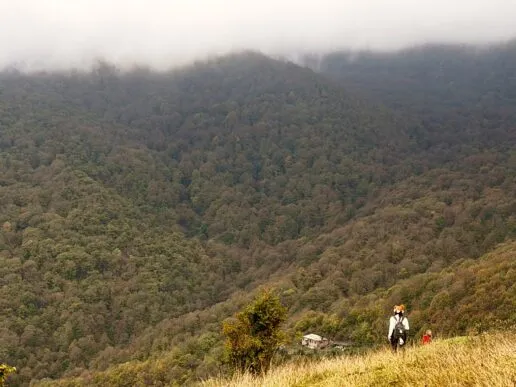
The experience is fascinating, stimulating and productive, but also relentless. By the Sunday, halfway through the COP, I need a break, a reconnection with the vibrant living world that underpins and is refracted through the many lenses of the COP. I escaped the bustle of the conference with two colleagues, and travelled two hours north to Dilijan National Park, a region of lush temperate forests in the lesser Caucasus mountains. We spent the day hiking through mountain forests, occasionally shrouded in an ethereal mist, their leaves turning gold and red. Many of the forest species were familiar compared to a western European context, but the diversity was greater. This region had acted as a refuge of biodiversity in the ice ages, evading extreme cold that much of northern and western Europe had succumbed to. The forested hills, cool air, changing colours and reflective conversations offered a welcome gateway of reconnection to the ancient rhythms and energies of the biosphere, beyond the language of targets and indicators.
Later in the week, I attended a session exploring the proposal for Dilijan to become a UNESCO Biosphere Reserve. Biosphere Reserves seek to bring together biodiversity conservation and sustainable development, recognising that human development and the rest of the natural world are not necessarily competing interests but can flourish together. They combine areas of strict protection with surrounding landscapes where communities live, work and develop sustainable livelihoods. The model has been going for many decades and has had successes around the world, although its effectiveness depends on how it is implemented. It offers one approach and example among many for meeting our ambitions for a flourishing future with the rest of the natural world. Perhaps just as importantly, it is a way of telling a more connected story about the relationship between people and the living world. I spoke on one panel on the importance of scientific storytelling for the task at hand. In the big picture, the GBF tells an astonishing aspirational story of reweaving our relationship with the Earth into one where human development and nature recovery go hand in hand, but that wondrous story can be hard to make out in the necessary minutiae of negotiation texts and evaluation frameworks.
Tropical forests were another focus of my week. I participated in a panel drawing on the work of the Science Panels for the Amazon, Congo and Borneo, international collaborations that bring together scientific evidence on the future of these vast forest regions and possible pathways towards sustainability. I continually argue that tropical ecosystems are the metabolic heart of our planet, the centre of our living world. They are centres of extraordinary biological activity, driving vast flows of water, energy and nutrients and helping regulate climate across continents. In the reports, mainly written by authors from tropical regions, we lay out science-informed pathways for a sustainable future for tropical forests.
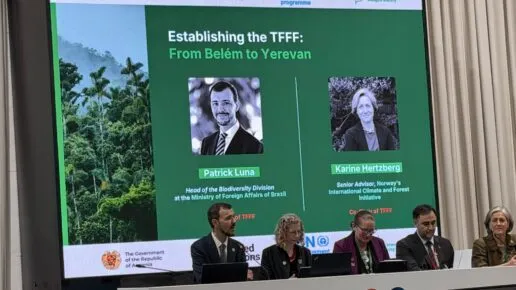
On Monday, I attended a packed side-event on the Tropical Forests Forever Facility, an innovative financial mechanism championed by Brazil and formally launched at the climate COP30 in Belém last year. Its ambition is to create a large investment fund whose returns can provide predictable, long-term financial support for countries that keep their tropical forests standing. Rather than depending on the shifting priorities of governments and short-term aid budgets, it seeks to establish a more durable economic foundation for forest conservation, with a share of funding directed towards Indigenous Peoples and local communities.
There are still substantial challenges in making such an ambitious mechanism work, but it was pleasing to see that progress had been made in setting it up and in some initial financial commitments to get it going. Protecting the world’s great tropical forests requires institutions and financial arrangements that can endure over decades, not just political cycles.
That Monday was a hugely significant day to reflect on the variability of political cycles. The meeting took place a few hours after Lula won re-election as President of Brazil. The relief and joy among the Brazilian participants was palpable: I spent the morning hugging pretty much every Brazilian I met. Brazil has played a leading role in advancing the tropical forest agenda, and the result gave a particular energy to conversations about its future. Under Lula, deforestation rates in the Brazilian Amazon and Cerrado savanna have plummeted, with the prospect of zero deforestation by 2030. Under his predecessor, Jair Bolsonaro, deforestation rates had surged upwards. The immediate prospects for progress or reversal for the Amazon had been on a knife-edge. It was a reminder of how closely international environmental ambitions are intertwined with national politics, and how vulnerable long-term commitments can be to changes in political direction. The more innovative mechanisms, like TFFF, can be created that are resilient to political cycles, the better.
In the tides of history
One thing I enjoy about these COP gatherings is the sheer experience of seeing multilateralism at work. They are messy, sometimes frustrating affairs. There are disagreements, competing interests, procedural complexities and moments of tension. Progress is genuine but slow and imperfect, targets are missed. Yet there is something remarkable about seeing people from almost every country on Earth, alongside scientists, Indigenous representatives, campaigners, businesses and civil society, trying to work through their differences around a shared concern for the living planet. This is not the only way to tackle the challenge of nature conservation and recovery, but it is a key part of the many paths that need to be taken. Much of the value lies not only in the agreements eventually reached, but in the conversations, relationships, exchanges of knowledge and gradual development of common purpose. I made many promising new international connections that I will follow up on to strengthen our work in this area.
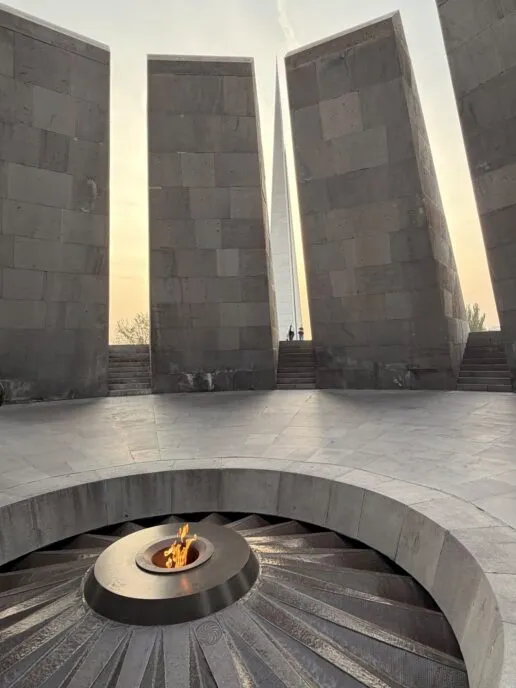
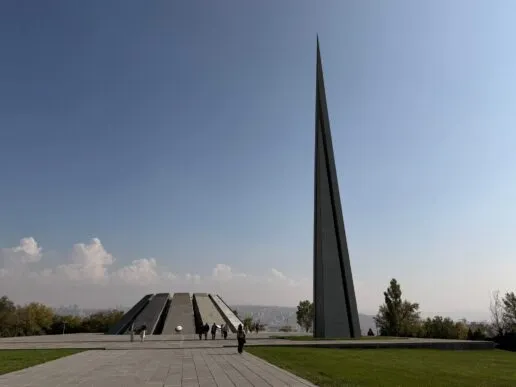
My final late afternoon in Yerevan was a more reflective one. I walked uphill from the conference centre, past busy, polluted highways, to Tsitsernakaberd hill, which is crowned by the Armenian Genocide Memorial. The memorial is stark: twelve concrete slabs in a circle leaning over an eternal flame like mourners at a funeral. Next to it is a soaring spire signifying the new Armenian nation, its twin spires echoing the sacred twin peaks of Ararat. Choral music played on speakers throughout. The memorial marks the approximately 1.5 million Armenians killed in the final years of the Ottoman Empire, one of the first brutal genocides of the twentieth century that played a major role in the coining of the term genocide. The millennia-old cultural landscape of what is now eastern Türkiye was erased and transformed. Ancient sacred Ararat looms down from across an impassable international border. It is a sombre, powerful place, and I sat there alone and still for an hour as a mark of respect, watching the sun sink low over the COP’s tangled negotiations. I reflected on the contrast between the darkness to which humanity can plunge, and the messy, practical actions and cooperation I had been witnessing all week.
Multilateralism is easy to criticise and get frustrated with. It is slow, untidy, full of compromise and often falls painfully short of what the urgency of our planetary challenges demands. But history offers many reminders of what can happen when nationalism overwhelms cooperation, when peoples cease to recognise one another’s humanity, and when the mechanisms for resolving differences break down.
The biodiversity crisis and nature recovery challenge are very different from the human tragedy commemorated on that hill, but they too require us to find ways of acting together across national boundaries, political differences and competing interests. The patient, imperfect work of cooperation matters more than ever.
I write this as I leave Yerevan on a 4 am flight, the immense silhouette of Ararat lingering in my mind. COP17 will not be remembered for a dramatic new agreement. Its significance lies instead in the painstaking work of turning shared ambitions into action, and in the conversations and relationships that make such action possible. For all its frustrations, I leave with a renewed appreciation of this messy enterprise of working together, and the possibilities it opens for a global renewal of our relationship with the rest of the natural world. After all, this ancient and nurturing biosphere does not respect our recent and ephemeral borders.
Related News Articles

A critical year for nature: four things needed to accelerate global biodiversity action

Collaborating to build evidence for sub-national biodiversity management in Africa

The University of Oxford at COP17: Advancing Global Action for Nature
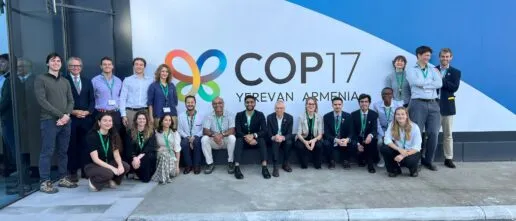
Oxford University COP17 Delegation
Are you going to COP 17? It'd be great to meet you there.
To reverse nature loss, change what drives it
David Cooper and Sandra Díaz publish an editorial in Science calling for us to address the root causes of nature loss
