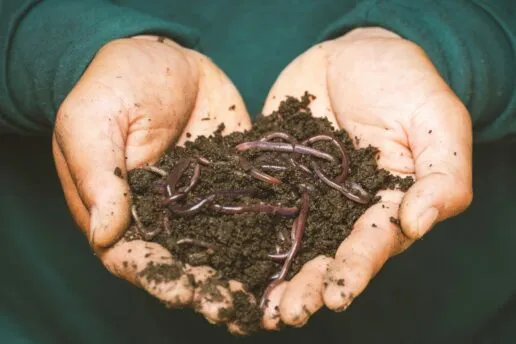

Earthworms are the megafauna of the belowground and some of our most important ecosystem engineers.
Preliminary data from Wytham Woods, UK, suggest that earthworms across the woods have a combined biomass of around 13 tonnes – roughly equivalent to four adult Asian elephants!
And they are busy!
Each year, earthworms in Wytham ingest an estimated 2 tonnes of leaf litter and an astonishing 42 tonnes of soil per hectare.
Through their constant movement, ingestion, and processing of soil and organic matter, earthworms help drive nutrient cycling, decomposition, and the formation and maintenance of soil structure – processes that underpin the functioning of the woodland ecosystem.
They may spend most of their lives hidden beneath our feet, but their impact is anything but hidden.
So spare a thought for the earthworms today — admire their work, leave them be, and remember: two halves don’t make two earthworms!
Related News Articles
Worm munch matters
The lives that slither and scurry beneath the soil’s surface are vital for ecological health: now we can listen in to them
On International Earthworm Day: Scientists tune in to the hidden sounds of our belowground ecosystems
This International Earthworm Day, the message is clear: Healthy soil isn’t just alive — it’s full of sound.

Related Projects
Ecoacoustics for assessing ecosystem health and function, from air to soil
Developing scaleable, transferable, and open approaches for ecoacoustics to assess nature recovery across global ecosystems

Ecoacoustic Data Analytics
Advancing AI methods to determine ecosystem composition from acoustic recordings, distinguishing species, geophonic & anthropogenic sounds in soundscapes as well as flagging unusual or unanticipated sounds.

Drivers of Soil Microbiota Composition Across Ecosystem Gradients
Exploring to what extent the community composition of soil bacteria and fungi across Ghana is driven by abiotic climatic or soil conditions and vegetation composition
