Publications
LCNR supported
Ecology
Remote Sensing
International Journal of Applied Earth Observation and Geoinformation
Accurately inferring plant functional trait composition, diversity, and redundancy across space and time is pivotal for understanding environmental change impacts on forests’ biodiversity and functioning. Here, we tested the capabilities of combining in-situ and remote sensing approaches to deliver accurate estimates of functional trait composition, diversity, and redundancy of temperate forest vegetation in South America (30°S to 53°S) considering leaf and stem morphological, nutrient, hydraulic, and photosynthetic traits. We identified hydrological stress, soil properties, and topography as key drivers of plant functional trait distribution and variation. Further, hydrological stress and soil properties were key determinants of functional diversity and redundancy across a large latitudinal gradient. Functional diversity peaked across Mediterranean forests, occupying between 30°S to 35°S. Functional diversity and redundancy were both high at latitudes between 35°S and 42°S, coinciding with Valdivian rainforests. Conversely, functional redundancy peaked between 42°S and 48°S, corresponding to Austral forests. Towards the southernmost extent of the study area, functional diversity and redundancy were both low between 48°S and 53°S, corresponding to the Magellanic subpolar forests. Our results highlight areas in South American temperate forests where both plant functional diversity and redundancy were maximal, hence potentially pointing towards areas more resilient to environmental change.

Related Projects
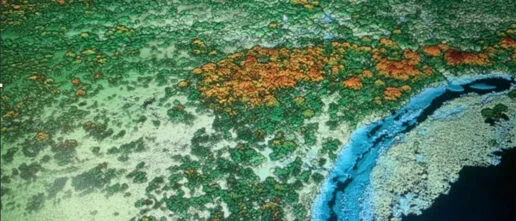
Mapping the resilience of tropical forests and savannas to global environmental change
Climate change effect on tropical forests
From Roots to Canopy: A Whole-Plant Understanding of Nutrient Flows in Tropical Forests and Savannas

Understanding nature recovery paths and ecosystem functioning through forests health assessments
Quantifying the health of forests ecosystems by means of earth observation can aid in understanding nature recovery paths and ecosystem functioning
