
I have a particular interest in developing and applying methods for understanding and predicting human behaviour in the context of local resource use in developing countries, and improving the effectiveness of incentive-based mechanisms such as payment for ecosystems services and biodiversity offsetting, in the marine and terrestrial realms.
Related News Articles

EJ Milner-Gulland becomes a Dame in first King’s Birthday Honours list
Congratulations to Dame Ej. Milner-Gulland on becoming a Dame in the first King's Birthday Honours list.

New Podcast with EJ Milner-Gulland
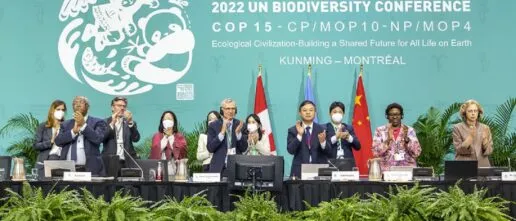
Statement from UK scientists on nature as an election priority
We are now in the run-up to a General Election, but nature recovery is not currently a major priority for any party, despite its loss being a major risk to the wellbeing and prosperity of our nation, and despite it being a high priority for the UK public. Additionally, current nature policy is focussed on […]
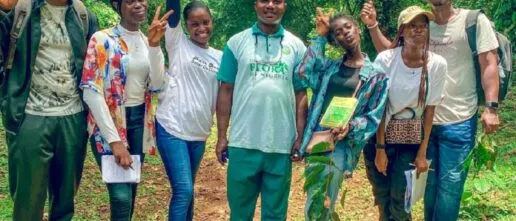
Nature Positive Universities at ICCB – Poster session
Nature Positive Universities: a Journey, a Pledge, a Global Movement for Nature We believe that universities have untapped power and influence to lead their communities towards a Nature Positive future, helping to halt biodiversity loss and support ecosystem recovery. In just over a year, in collaboration with the United Nations Environment Programme, Nature Positive Universities […]

Our response to Defra’s consultation on improving the implementation of Biodiversity Net Gain for minor, medium and brownfield development
We raise concerns about the effect that the proposed changes will have on the demand for units on the off-site BNG market, based on research into the outcomes of the off-site market, & highlight the potential for worsening ecological outcomes from the changes proposed to the Small Sites Metric.

World’s most influential companies make nature promises, but most lack accountability
New research by the University of Oxford and the Stockholm Resilience Centre at Stockholm University has revealed that most biodiversity commitments made by large influential companies are not precise enough to enable society to evaluate whether they are making progress towards their commitments
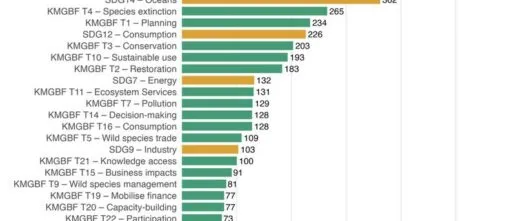
Mapping monitoring resources to support progress tracking of global biodiversity-related commitments

Related Research Themes

Systems
Developing a novel Analysis and Decision Platform to integrate nature recovery into land-use and infrastructure planning, and exploring scenarios that can deliver local, national and international commitments to nature, climate change and sustainable development.

Policy engagement for nature recovery
We work with policy-makers to foster effective approaches to nature recovery, using the Centre's unique evidence-base and compelling stories about nature and its value to society.

Ecology
Testing the effectiveness of different ecological approaches for nature recovery to support biodiversity and the delivery of ecosystem services such as climate change mitigation and adaptation.

Related Projects

NATURE Impacts: National Assessment Tool for Understanding Relative Environmental Impacts
A forward-looking tool to track global progress, prioritise national action, and maximise impact for nature recovery
Coordinating Research Around Biodiversity Net Gain
At its heart, BNG frames a challenging question: in a world where new housing, workplaces and other land use needs are deemed essential; is it possible to provide this infrastructure without Nature bearing the brunt of the costs?
The Good Natured Conservation Optimism Short Film Festival
An inspiring and empowering collection of short films showing stories from across the natural world

How do we account for biodiversity?
Restoring nature in a socially just way, in the context of economic development activities.
Pioneering Nature-Positive Pathways: Organisational Approaches for delivering Nature Recovery
Understanding the methods and actions required by large organisations to deliver effective and equitable biodiversity outcomes in line with achieving global nature recovery goals.

Reimagining Nature Finance
Designing finance in service of the living world
Related Outputs
Biodiversity offsets perform poorly for both people and nature, but better approaches are available
Highlights • Local planning constraints deliver poor biodiversity net gain (BNG) offsets • Removing those constraints results in significant BNG improvements • Alternatively, offsets can deliver gains in environmental access
‘Nature positive’ must incorporate, not undermine, the mitigation hierarchy
For the concept of nature positive to succeed as the lodestar for international action on biodiversity conservation, it must build upon lessons learned from the application of the mitigation hierarchy — or risk becoming mere greenwash.
Navigating uncertainty in LCA-based approaches to biodiversity footprinting
The use of Life cycle assessment (LCA) methods is rapidly expanding as a means of estimating the biodiversity impacts of organisations across complex value chains. However, these methods have limitations and substantial uncertainties, which are rarely communicated in the results of LCAs. Drawing upon the ecological and LCA literature on uncertainty and two worked examples […]
Analyzing the outcomes of China’s ecological compensation scheme for development-related biodiversity loss
Over the past three decades, China’s government has implemented many projects under its ecological compensation policy, including paying compensation fees for habitat creation to redress natural habitat losses caused by development. However, a critical evaluation of both the policy design and its ecological outcomes, has not previously been carried out. We assemble diverse data sources […]
Incorporating local nature-based cultural values into biodiversity No Net Loss strategies
Achieving “No Net Loss” (NNL) of nature from a development typically requires projects to follow a ‘mitigation hierarchy’, by which biodiversity losses are first avoided wherever possible, then minimised or remediated, and finally any residual impacts offset by conservation activities elsewhere. Biodiversity NNL can significantly affect people, including their cultural values. However, empirical research is […]
No net loss for people and biodiversity
Badly planned offsets can exacerbate poverty, and development and offset impacts can vary across spatial-temporal scales and by location, gender, and livelihood. We conceptualize the no-worse-off principle in the context of NNL of biodiversity, by exploring for whom and how the principle can be achieved.
Importance of Baseline Specification in Evaluating Conservation Interventions and Achieving No Net Loss of Biodiversity
When setting objectives for conservation activities, or judging their efficacy after implementation, an appropriate frame of reference against which evaluation is made should be specified. We developed 2 models to investigate the implications of setting different frames of reference in regions subject to various biodiversity trends and anthropogenic impacts.
The Nature Positive Journey for Business: A research agenda to enable private sector contributions to the global biodiversity framework.
As a group of researchers and consultants working at the interface between business and biodiversity, we propose a conceptual model through which private sector contributions to a Nature Positive future could be realised and use it to identify priority research questions.
Nature Seminar Series. In search of the holy grail – the one true biodiversity metric. E.J. Milner-Gulland
Signatories to the Convention on Biological Diversity’s Global Biodiversity Framework promised to work towards halting and reversing the loss of biodiversity by 2030 – a bold mission, and one which has a plethora of sub-targets and indicators associated with it. How these indicators will scale from local to global and how they can be aggregated […]
Partners